Spirit Art explained

What Is Spirit Art?

By Anne-Marie Bond

Spirit Art is an umbrella term for creative work that is made alongside a spiritual, intuitive, psychic or mediumistic practice. For some people that means drawn portraits of loved ones in the spirit world. For others it means symbolic images, colour, landscape, guides, or shapes that arrive quietly during meditation. There is no single agreed definition, and different practitioners and traditions use the words in slightly different ways, so it is always worth asking someone what they mean by it rather than assuming.

What most forms share is the working method. The artist settles, becomes receptive, and then makes marks on paper. The inspiration may feel as though it comes from beyond the artist, but the drawing itself is still made by a human hand holding a pencil. That is the part of the practice this page concentrates on, and it leads us into Spirit Portraiture, which is the area most closely connected with Spirit Art Mentor.

What is a Spirit Portrait?

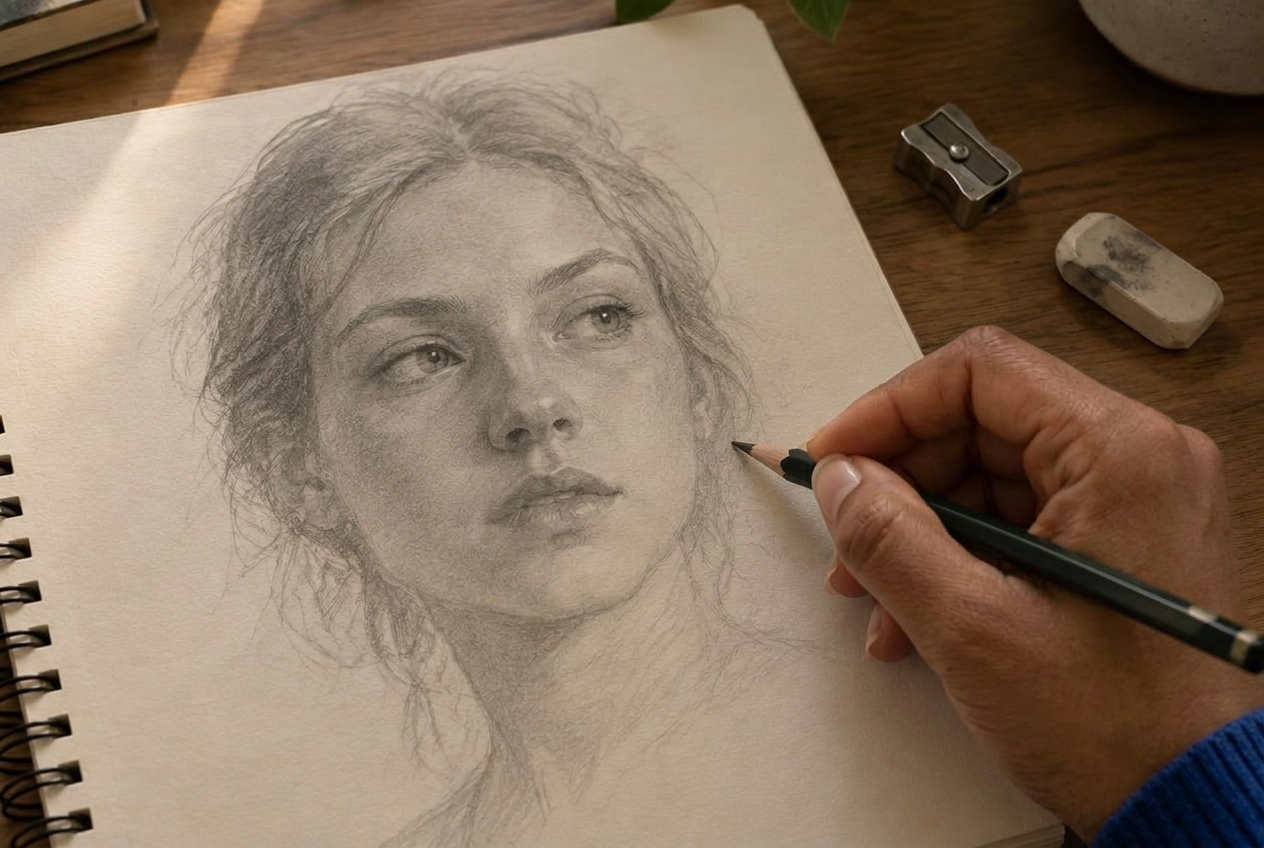
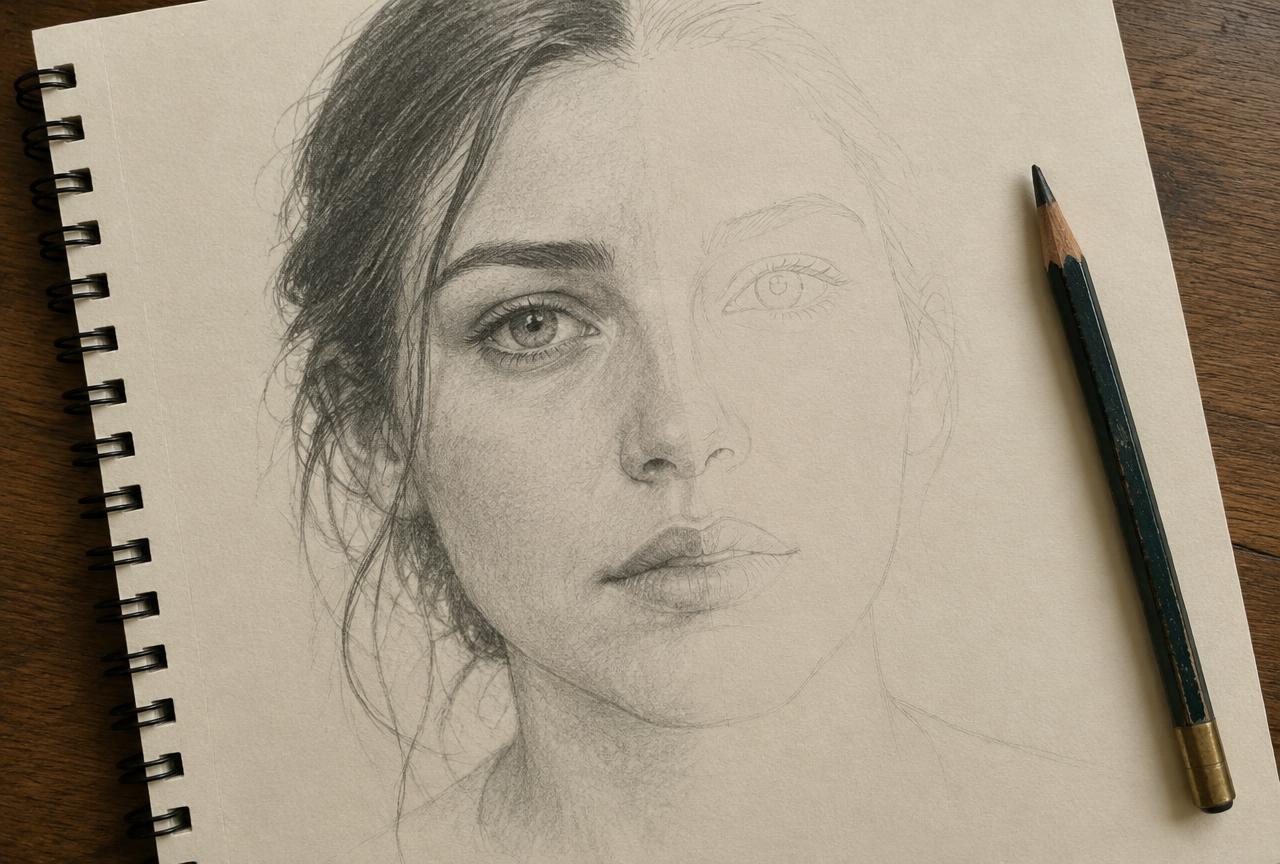
A Spirit Portrait is a drawing of a face or figure created within a spiritual or mediumistic practice. The artist works receptively, often without a photograph or sitter in front of them, and allows an impression of a face to build up on the paper. Some are drawn in a demonstration setting for a named recipient. Others are drawn quietly at home as part of personal development.

It is important to be honest here. Not every Spirit Portrait is evidential, and not every likeness that feels strong to the artist will be recognised by anyone else. Sometimes a portrait is recognised warmly. Sometimes it is not, and that is a normal part of developing. A portrait can be a sincere and meaningful piece of work without carrying evidence, and it can still teach you a great deal about drawing.

Spirit Art, psychic art and mediumistic art

These three terms are often used interchangeably, and you will hear them swapped freely at workshops and platform demonstrations. They can, however, carry different meanings depending on who is speaking.

Many practitioners use psychic art to describe images drawn from the energy, personality or circumstances of the living person sitting in front of them. Mediumistic art tends to describe work created in connection with someone in the spirit world. Spirit Art is usually the widest term of the three and can cover both, along with symbolic and inspired work that is not portraiture at all.

None of these definitions is universal, and you may hear the terms used differently depending on the teacher, tradition or individual artist.

What does a Spirit Artist do?

A Spirit Artist combines several things at once: a receptive spiritual or intuitive practice, careful observation, interpretation of impressions that are often faint or fragmentary, and the practical craft of drawing. Much of the skill is in staying open while your hand keeps working, and in resisting the urge to tidy an impression into something you already expect to see.

Here is the point that is easy to overlook. Whatever the inspiration behind a portrait, the physical drawing still obeys the same artistic fundamentals as any other portrait:

  • proportion
  • feature placement
  • shape
  • tone
  • light and shadow
  • form
  • likeness
  • line confidence

Whatever the source of the inspiration, developing stronger drawing skills can help you represent what you perceive more accurately on the page.

Do you need to be good at drawing to practise Spirit Art?

No. People come to Spirit Art at every artistic level, from those who have not drawn since school to trained artists exploring a spiritual practice for the first time. I have taught both, and I would not want either to feel out of place.

Drawing ability is learnable. It responds to observation, repetition and an understanding of the fundamentals, and it improves in small, unglamorous steps rather than sudden leaps. What I cannot promise anyone is a particular spiritual experience or outcome, and I would be wary of anyone who does. What can be promised is that your drawing will improve if you keep practising thoughtfully.

How do you learn Spirit Portraiture?

Steadily, and mostly through doing. The approaches that help most are simple ones:

  • draw regularly, even briefly, rather than occasionally and at length
  • work from real faces and sitters as well as receptively
  • learn where the features actually sit on a head
  • experiment with pencil, charcoal, pastel and different papers
  • review your finished drawings honestly a day or two later
  • choose one area to improve at a time instead of everything at once
  • practise alongside others so you see how differently people work
  • invite constructive artistic feedback and let it be specific

Practising with other people is worth seeking out. I facilitate live portrait practice sessions through the Drawing Portraits Club, where the emphasis is on strengthening portrait skills in company rather than performing.

If you would like a step-by-step approach to the drawing process, the how to draw Spirit Portraits guide walks through the process from first observation to finished portrait. For practical starting points on specific skills, the spirit portrait drawing tips page covers proportion, tonal range and likeness in more detail.

Developing the artistic side of Spirit Portraiture

Most artists reach a point where they can sense that a portrait is not quite right without being able to say why. The mouth feels wrong, or the face reads flat, or the likeness slips away somewhere between the brow and the chin. That frustration is almost always artistic rather than spiritual, and it is usually fixable once it has been named.

A structured review looks at things such as:

  • proportion
  • feature placement
  • tonal range
  • form and three-dimensionality
  • symmetry and alignment
  • line quality and confidence
  • overall likeness
  • the specific things making a face appear flat

Spirit Art Mentor was created for exactly this. You upload a photograph of your drawing and receive a written mentor report on the artwork: what is working, what needs attention, one clear priority, and a short exercise to try before your next portrait. It assesses drawing skill and technique only. It does not judge whether a communication is genuine, whether a portrait depicts a real person, or whether you have mediumistic ability. That side of your development belongs with you and your own teachers.

You can try it without paying anything. The free Mentor Taster gives you a preview of how your drawing is assessed.

Spirit Art is a developing practice

Spirit Art is not something you finish. It is a practice that keeps opening up, and the artists who develop furthest are rarely the ones chasing a perfect drawing. They are the curious ones: the people who keep observing, keep experimenting with materials, keep asking why a face reads the way it does, and keep drawing when the result is not what they hoped for.

Be patient with yourself. Draw often, look carefully, and let each portrait teach you one thing. That is how the work grows.